
The Challenge
Sentimental objects take up space, but the memories inside them shouldn't have to.
Sentimental objects become a problem at moments of change: moving somewhere smaller, downsizing, or sorting a loved one's belongings after a loss. Space shrinks, but the memories attached to objects don't, so letting go can feel like losing part of the story. Photo albums and camera rolls show how an object looks, not why it matters, and notes or journaling apps leave you with a blank page and no reason to return. Nothing is built around an object's story. I felt this myself. After nine years away from home and two countries, I kept small mementos, but many sentimental objects ended up in the trash, not because I wanted that, but because carrying them all became too much.
How might we digitize sentimental objects, so users can preserve the memories tied to them.
Research Approach and Limitations
I combined my own experience with what real people say publicly about the things they keep.
I combined four methods. I documented 5 of my own personal trinkets and noted down why I kept them. I gathered 30 public sources, including Substack posts and comments, blogs, a forum, news and essays, then quoted them and sorted them into nine themes. I reviewed the listings of six memory-box apps, with user reviews still to mine. I also drew on research by Winterich et al. (Penn State) on photos and letting go, Kent (2022) on narrative and downsizing, and Odom et al. (2014) on digital possessions.
Sorting what people say about the things they keep

Being Comfortable with Uncertainty
After initial stakeholder meetings, we found ourselves with dozens of potential insights but no clear direction. Instead of rushing to solutions, we sat with the uncertainty and started finding patterns through affinity diagrams. This patience revealed the core issue lies in knowledge access and sharing.
Communicating our Findings
Further research approach combined qualitative stakeholder interviews with journey mapping to understand both current pain points and future opportunities. Working directly with FNC's systems engineering team allowed us to ground our design decisions in real organizational challenges.
6
Stakeholder Interviews
10+
Projects analyzed between departments
180+
Total hours of research

Revamping FNC's Relationship with Knowledge
FNSIGHT is a centralized knowledge management system concept that would enable FNC to retain, manage, and share project knowledge across the organization. The platform transforms isolated project information into an accessible, searchable database that supports both current work and future business development.

Project Database
Searchable archive of 3,500+ past projects with AI-powered summaries, team information, and outcomes. Engineers find relevant precedents in seconds instead of hours.

Interactive visualization of FNC's professional network across industries and organizations. Identifies partnership opportunities and subject matter experts.
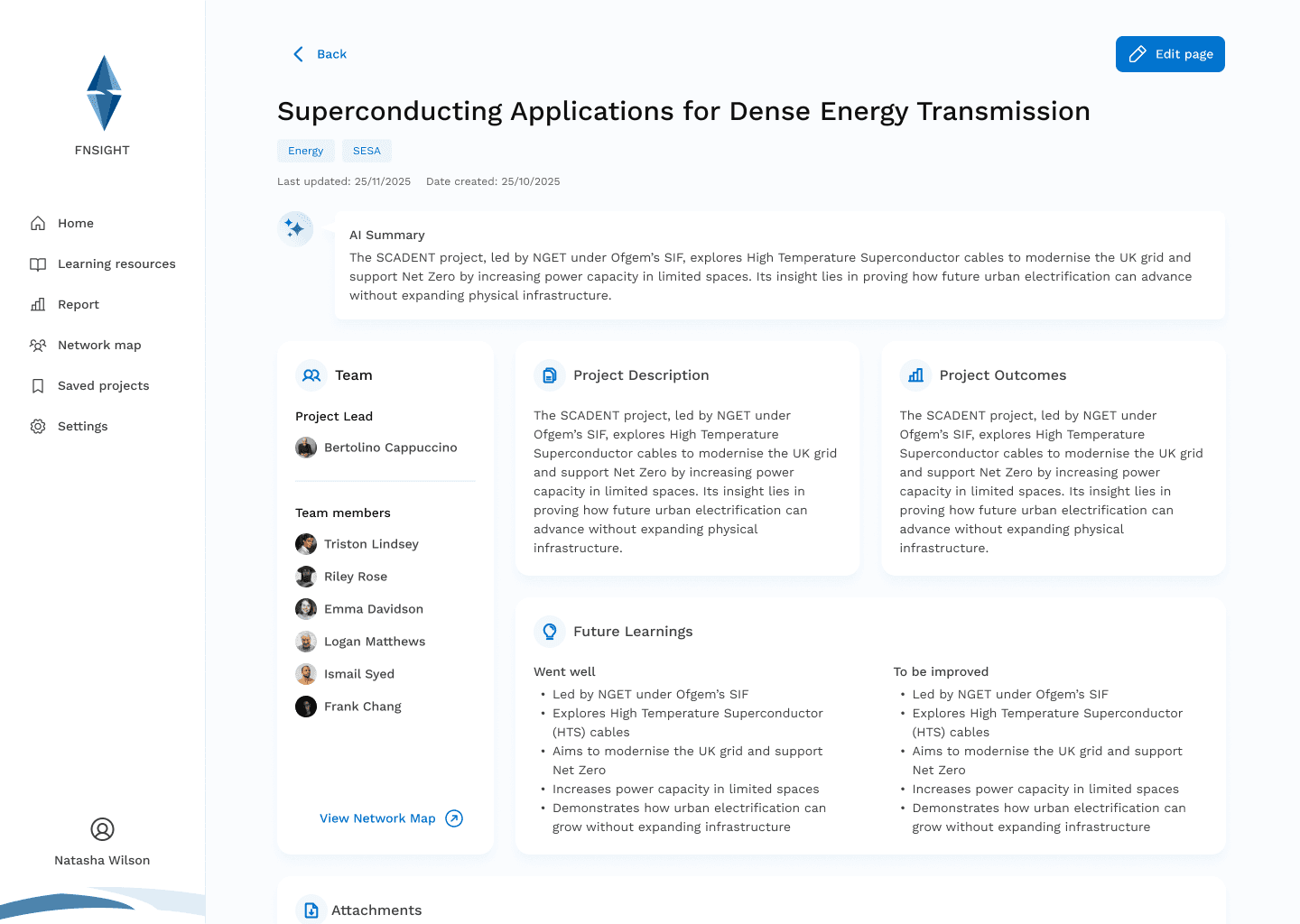
Projects Page
A user-friendly project page accessible to all, allowing new joiners to effectively bridge the knowledge gap and contribute more information to the project.

Real-time analytics tracking knowledge base adoption, contributions, and usage patterns. Helps leadership measure system value and identify gaps.
Design Considerations
