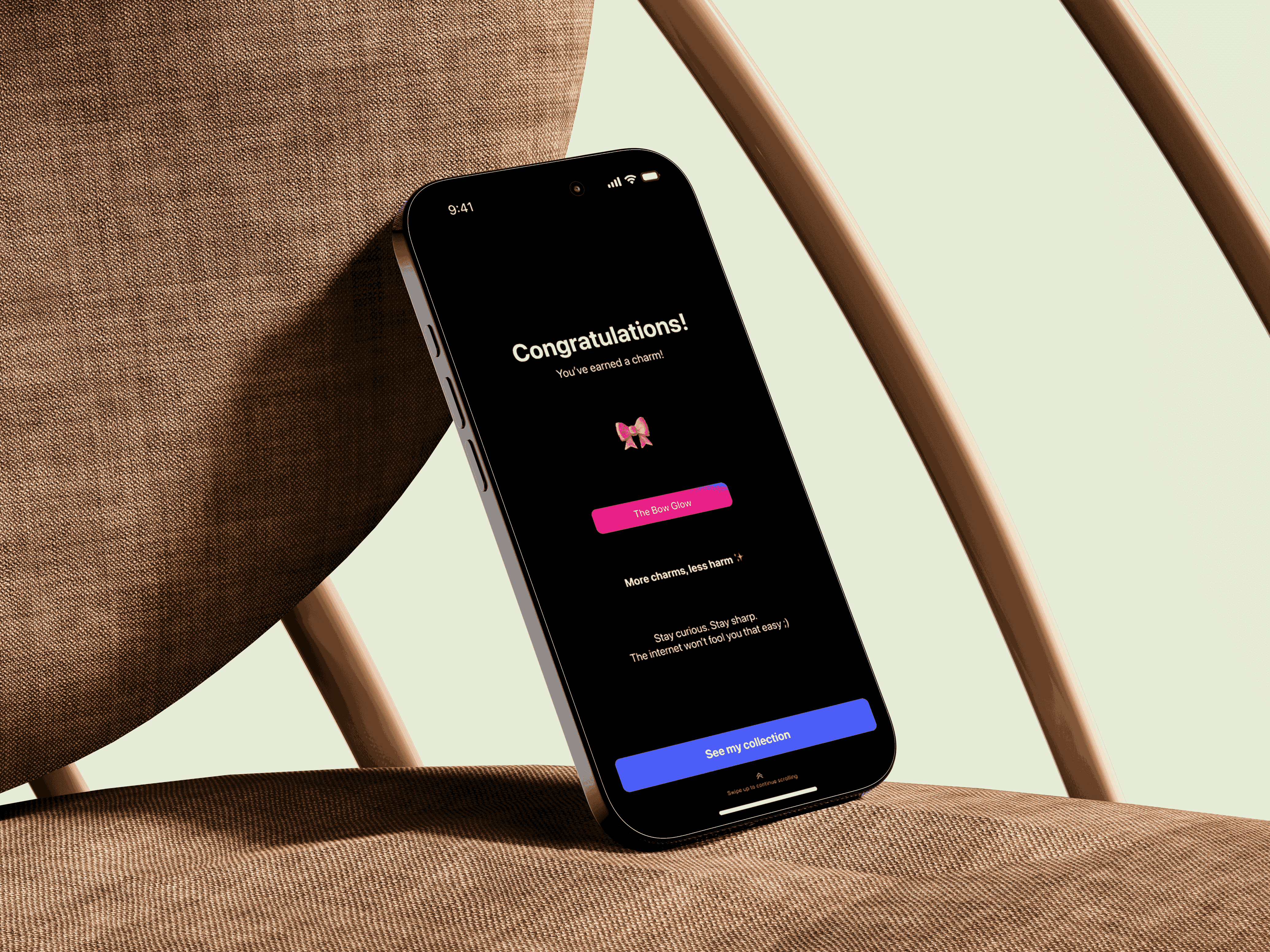
Gamifying the Path to Digital Literacy

Australians are heavy digital users, but many feel unprepared in judging, questioning, or resisting the online content shaping their lives. The challenge is to design a digital solution that makes critical and mindful digital engagement effortless in routine contexts.

Team:

Timeline:

Role:

Tools used:

4 Designers

48 Hours

UX Researcher, UI Designer

Figma

Team:

Timeline:

Role:

Tools used:

4 Designers

48 Hours

UX Researcher, UI Designer

Figma

The Challenge

Create a digital solution that makes critical and mindful digital engagement effortless in routine contexts for Australians who feel unprepared to judge, question, or resist online content. Our team had 48 hours to design a solution that could meaningfully address this challenge.
‍

Core Insight!

Users already verify information through comments and community discussion, but they lack the critical thinking frameworks to do it effectively. The question wasn't whether to engage users in verification—it was how to teach them while they're already doing it.

The Scale of Misinformation

Source: Australian media literacy research studies (2025)

60%

Gen Z rely on social media for news

74%

18-29 year olds see misinformation weekly

61%

Misinformation comes from Meta platforms

15+ Interview later we found that…

Users commonly feel fear, frustration, or annoyance when encountering misinformation before deciding whether to act on it.


Repeated exposure to misinformation reduces emotional response and increases passive acceptance over time.


Lack of time and effort is a major reason users choose not to fact-check content, even when unsure of its accuracy.


Users are hesitant to interact with reporting tools, surveys, or prompts due to concerns about algorithms and content targeting.


Users prefer clearer context, visible sources, and transparency over content being removed or heavily moderated.

Users commonly feel fear, frustration, or annoyance when encountering misinformation before deciding whether to act on it.


Repeated exposure to misinformation reduces emotional response and increases passive acceptance over time.


Lack of time and effort is a major reason users choose not to fact-check content, even when unsure of its accuracy.


Users are hesitant to interact with reporting tools, surveys, or prompts due to concerns about algorithms and content targeting.


Users prefer clearer context, visible sources, and transparency over content being removed or heavily moderated.

Who We're Designing For

we then created a persona based on the user interviews and the secondary research to solidify our target user.

So our design question is!

How might we embed digital literacy learning into everyday social media use to build critical thinking and verification confidence?

How might we embed digital literacy learning into everyday social media use to build critical thinking and verification confidence?

Introducing IG Charms

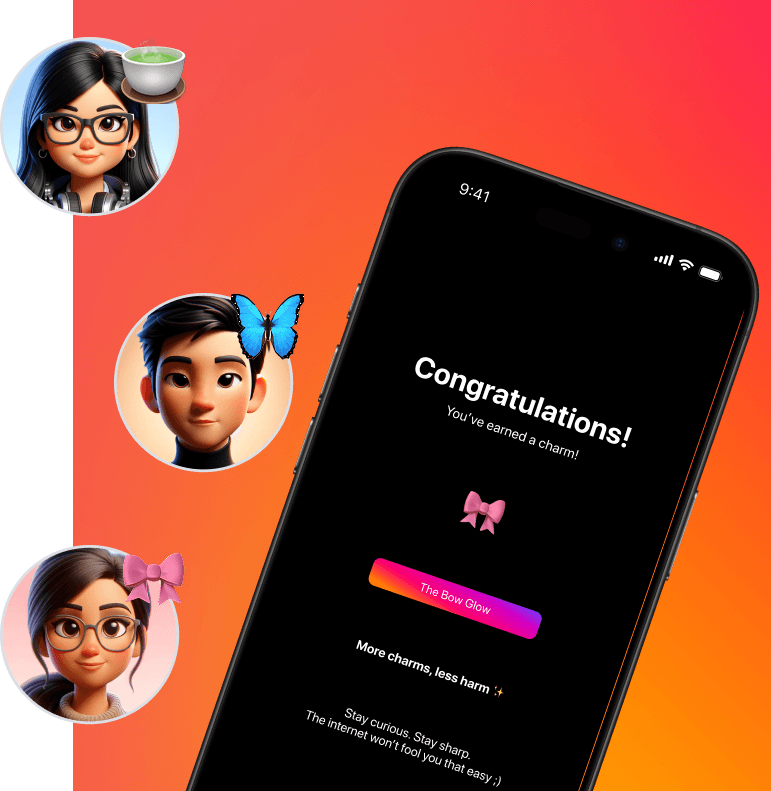
Instagram Charms is a gamification system that rewards users for engaging with educational content about misinformation and critical thinking. When users encounter potentially misleading content, they're invited to participate in quick quizzes that teach verification skills—earning collectible "charms" for their profile in return.
The Experience

User scrolls Instagram

Quiz prompt appears on flagged content

One-click question with explanation

Earn charm for participation

Display badges on profile

Why it Works

Gamification drives engagement

Immediate feedback reinforces learning

Comments already used for verification

Charms create social proof

No algorithm disruption

The Experience

User scrolls Instagram

Quiz prompt appears on flagged content

One-click question with explanation

Earn charm for participation

Display badges on profile

Why it Works

Gamification drives engagement

Immediate feedback reinforces learning

Comments already used for verification

Charms create social proof

No algorithm disruption

The Experience

User scrolls Instagram

Quiz prompt appears on flagged content

One-click question with explanation

Earn charm for participation

Display badges on profile

Why it Works

Gamification drives engagement

Immediate feedback reinforces learning

Comments already used for verification

Charms create social proof

No algorithm disruption

Key Learnings

Lasting change requires more than gamification

Lasting change requires more than gamification

I learned that while badges can motivate initial engagement, sustained behavior change requires the underlying system to be genuinely valuable. If I had more time, I'd explore how to change Instagram's algorithm to promote trusted content—making the environment itself support critical thinking, not just reward it.

Designing is only half the battle

Designing is only half the battle

The judge feedback focused on storytelling and connecting our solution back to the brief. A great design poorly communicated loses to a simple concept with compelling delivery. I now understand that selling the "why" is just as important as demonstrating the "what."

Design within constraints, not around them

Design within constraints, not around them

Rather than proposing a new app or platform, we worked within Instagram's existing ecosystem. This made our concept more believable and implementable. The best solutions often aren't revolutionary—they're smart integrations into what already works.

The judges raised the innovative gamification approach and understanding of Instagram's ecosystem. Main critique: strengthen the connection between design brief and solution execution—show more clearly how charms drive sustained behavior change.

No Real-World Testing: With only 48 hours, we couldn't validate whether users would actually engage with quizzes or if learning would stick


Incomplete Solution: Badges alone can't solve media literacy—this would need to be paired with algorithmic changes that promote trusted content


Technical Feasibility Unknown: Would require partnership with Meta and integration with their existing content moderation systems


Behavioral Assumptions: We assumed users want to learn; reality may be they prefer comfortable ignorance over cognitive effort

Limitations and what's missing

Limitations and what's missing

No Real-World Testing: With only 48 hours, we couldn't validate whether users would actually engage with quizzes or if learning would stick


Incomplete Solution: Badges alone can't solve media literacy—this would need to be paired with algorithmic changes that promote trusted content


Technical Feasibility Unknown: Would require partnership with Meta and integration with their existing content moderation systems


Behavioral Assumptions: We assumed users want to learn; reality may be they prefer comfortable ignorance over cognitive effort

THE END

© 2026 Inglebert Christiansen. All rights reserved.

Home

Playground

About

Resume